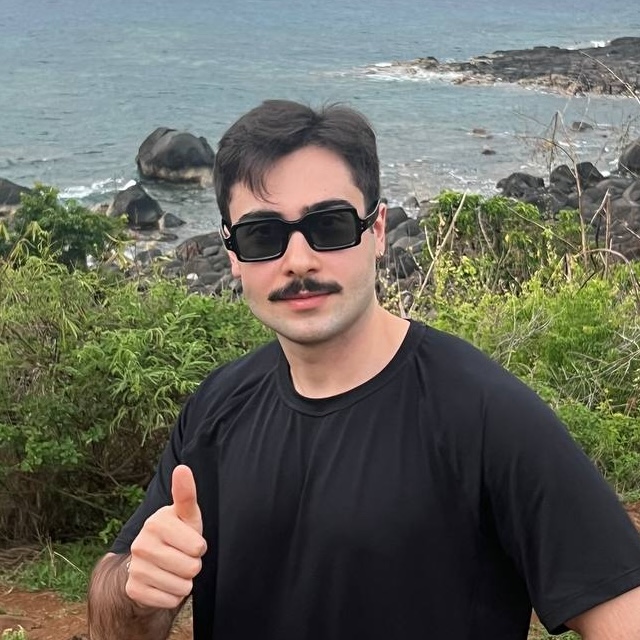
Built by Oleg Mamiev.
It started with a video. A long breakdown of phone snatching, clip after clip of CCTV footage: a rider mounts the pavement, a hand reaches out, and the phone is gone before its owner finishes their sentence. Two seconds, start to finish.
I couldn't stop thinking about it — partly because of how routine it looked, and partly because of a nagging engineering question: why does the phone just let this happen?
Why Snatch Guard exists
An iPhone can detect a car crash. An Apple Watch knows when its owner falls. The hardware to recognize a violent, split-second motion event has been in our pockets for years. Yet at the exact moment a phone is ripped out of a hand — the moment that decides whether a thief gets a locked brick or an open banking app — it does nothing. Everything that exists today, from Find My to Stolen Device Protection, starts helping after the phone is already gone.
It genuinely surprised me that nothing reacted in the moment itself, Apple's own features included. I kept looking for an app that did, and couldn't find one. So I decided to try.
How it came together
A snatch has a physical signature: an acceleration spike unlike anything in everyday handling. I ran a series of experiments with the accelerometer — recording what normal life looks like against a violent grab — until detection was reliable and daily use didn't trigger it.
The second half of the puzzle was what to do in that fraction of a second. iOS doesn't let a third-party app lock the device — but Screen Time can shield your apps instantly. Put the two together and you get Snatch Guard: on-device detection, and a shield over your apps in under a second — before the thief's first swipe.
The principles
- Free, for everyone. It's a safety tool — the people who need it most shouldn't have to pay for it.
- On-device only. Detection runs locally; the app makes no network calls, has no account, and no tracking. Nothing about you leaves your phone.
- No engagement tricks. You set it up once and, with luck, never think about it again. No streaks, no upsells, nothing designed to pull you back into the app.
Who I am
I'm Oleg Mamiev, a software engineer and engineering team lead with about ten years of experience, mostly in backend and cloud systems. Snatch Guard is a personal project: designed, built, and shipped by one person.
Find me on LinkedIn and GitHub, or send feedback through the feedback form — I read everything.